What does it take to design a truly terrible public service?
Start with a solution before understanding the problem. Make decisions behind closed doors. Keep users out of the process. Buy technology before you know what you need. Give teams conflicting priorities. Make sure nobody works together.
At GovCamp Cymru, we started our session with a thought experiment. We asked a room of user-centred design practitioners what conditions are needed to make sure we design and deliver public services that are completely unusable, entirely fail to meet user needs, waste maximum taxpayer money and make our teams feel completely defeated. They listed all of the above.
The uncomfortable part? People recognised these behaviours from their own workplaces.
The room was full of people who care deeply about making services work better. People with the skills to understand problems, challenge assumptions, bring different perspectives together and turn evidence into improvements that make a difference to people’s lives.
Yet too often, they’re working in organisations that make those things unnecessarily difficult.
We know what good looks like. Let us help you deliver it.
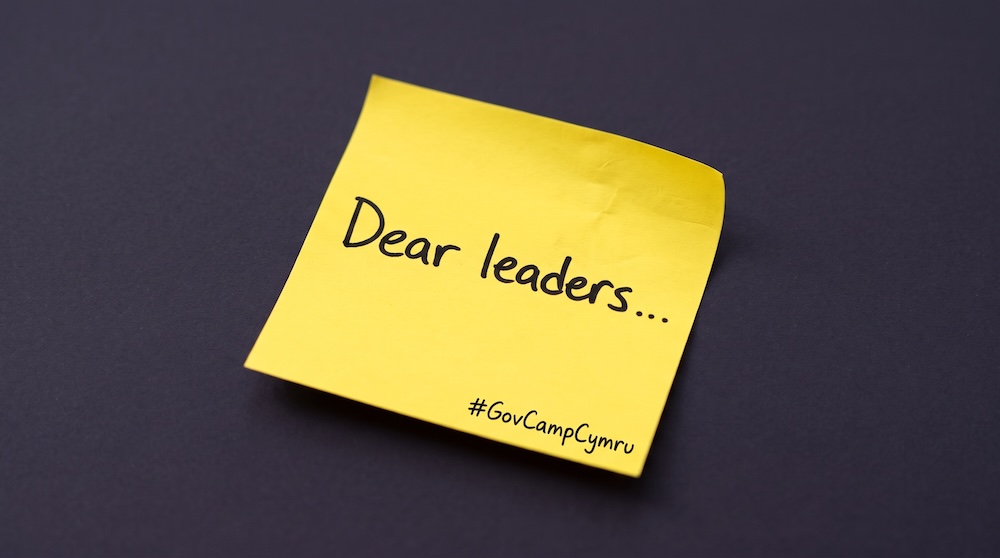
We asked practitioners to write a message to leaders about what they needed to do their best work.
Their answers were refreshingly direct.
“Involve us at the beginning.”
“Procure a team, not a solution!”
“We need you to trust us to do our best work.”
“Stop asking us to do more things and start checking we’re doing the right things in the right way that offers value to the people of Wales.”
These aren’t demands to let designers do whatever they want.
They’re an invitation to make better decisions together.
To understand problems before committing to solutions. To use research to challenge assumptions, not simply validate decisions already made. To bring policy, operations, technology and design expertise together from the start.
And to recognise that the people we’ve employed to improve services need the trust, time and authority to do it.
Good design needs good leadership
One participant captured something important:
“It’s not a digital problem, it’s a leadership problem.”
That might sound confrontational. But it’s also an opportunity.
Because many of the things preventing good user-centred design aren’t design problems.
They’re decisions about funding, procurement, governance, organisational boundaries and priorities.
We already have a Digital Service Standard for Wales that describes how to design and deliver better services. Service assessments offer an opportunity to put those principles into practice, challenge established ways of working and build organisational capability.
But standards alone won’t change anything if leaders don’t create the conditions to meet them.
As one practitioner put it:
“Treat the service standard seriously and create conditions / capabilities within the organisation to be able to meet it!”
This is where leadership makes the difference. Not by having all the answers, but by being willing to ask better questions, listen to evidence, make difficult choices and give teams the space to learn.
Let’s work differently, together
We don’t expect leaders to become user researchers or service designers. And we don’t pretend that practitioners have all the answers.
In fact, one of the most thoughtful messages from the session challenged us too:
“We need to apply our UCD skills to understand your needs as our user. Are you up for that? (Are we?)”
It’s a question worth exploring.
What if we spent less time trying to convince each other that our expertise matters, and more time understanding how we can use it together?
What if leaders invited practitioners into the difficult decisions earlier, and practitioners had more opportunities to understand the pressures and trade-offs leaders face?
What if we treated the Service Standard as a shared commitment to better outcomes, rather than something for digital teams to worry about?
Wales has talented, committed practitioners who want to make public services better. We should be making the most of them.
So, dear leaders, we’re ready to do the work. Are you ready to create the conditions that make it possible?